The squat is one of the most useful exercises you can learn, and you don’t need a gym or any equipment to start. It mirrors movements you already make every day, like standing up from a chair or picking something up off the floor, which is why it’s a staple of beginner workouts and physical therapy programs alike.
Muscles Worked by Squats
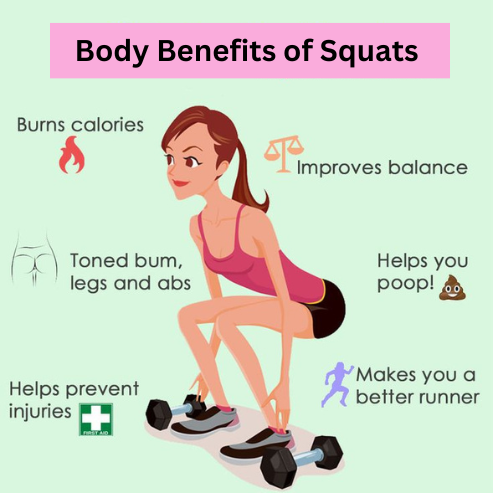
Squats mainly train the big muscles of your lower body: the quadriceps at the front of your thighs and the glutes in your hips. They also involve your hamstrings, calves and the muscles deep in your hips, and your core works to keep your torso steady throughout the movement.
Health Benefits of Squats
- Stronger legs for daily life. Strong thighs and hips make stairs, walking and getting out of a chair easier, which becomes increasingly valuable as you age.
- Better balance and stability. Training the muscles around your hips, knees and ankles together helps them work as a team, which may help you stay steady on your feet.
- Support for bones and joints. Resistance exercise puts healthy stress on bones and the tissues around joints, and regular strength training is generally recommended to help maintain bone strength.
- Calorie burn and body composition. Large muscle groups use a lot of energy, so squats can be a useful part of a routine aimed at managing weight when paired with sensible eating.
- Mobility. Moving through a comfortable range of motion on a regular basis helps keep your hips and ankles flexible.
How to Do a Bodyweight Squat
- Stand with your feet about shoulder-width apart, toes pointing slightly outward.
- Tighten your core and keep your chest lifted and your gaze forward.
- Push your hips back and bend your knees as if sitting into a chair, keeping your weight over the middle of your feet and heels.
- Lower only as far as you can while keeping your back straight and your heels on the floor. Your knees should track in line with your toes rather than caving inward.
- Press through your feet to stand back up, squeezing your glutes at the top.
Start with 2 sets of 8 to 12 repetitions, two or three days a week, and rest a day between sessions. Once that feels easy, you can slow the movement down, hold a weight at your chest or move on to variations such as goblet squats.
Tips for Safe Squatting
- Prioritize good form over depth or speed. A shallow, controlled squat beats a deep, sloppy one.
- Warm up first with a few minutes of walking or gentle leg swings.
- Stop if you feel sharp pain in your knees, hips or back, as opposed to normal muscle fatigue.
- If you have joint problems, an injury, are pregnant, or haven’t exercised in a long time, talk with your doctor or a physical therapist before starting. A qualified trainer can also check your form.
This article is for general information and is not a substitute for personal medical advice.